

Table of Contents
- Why Proper Jewelry Storage Matters
- Assess Your Gemstones: Understanding Hardness and Vulnerability
- Individual Storage: Separating Pieces to Prevent Scratching
- Best Jewelry Storage Organizers for Delicate Pieces
- Controlling Your Storage Environment: Temperature, Humidity, and Light
- How to Tell If a Gemstone Setting Is Secure
- Storage Solutions for Specific Jewelry Types
- Maintenance and Long-Term Storage Protocols
- Frequently Asked Questions
Last Updated: October 1, 2026
Why Proper Jewelry Storage Matters
The way you store jewelry determines whether your pieces remain pristine or suffer permanent damage. Gemstones scratch. Metals tarnish. Delicate settings loosen over time. Most people don't realize that storage choices matter as much as the jewelry itself.
Storage is climate control for your treasures. Temperature swings, humidity spikes, and direct sunlight damage gemstones differently, and pearls require completely different conditions than diamonds.
Heirloom pieces are often destroyed by careless storage: a grandmother's engagement ring left in a bathroom drawer can tarnish and corrode; a vintage brooch in a plastic bag can develop moisture damage. These are preventable.
Loose prongs fail, organic gemstones crack, and precious metals oxidize, but proper storage prevents all of this. You need knowledge about what damages what, not expensive equipment.
Assess Your Gemstones: Understanding Hardness and Vulnerability
A diamond withstands conditions that would shatter an opal. Understanding your stone's vulnerability is the foundation of proper storage.
The Mohs Hardness Scale and What It Means for Storage
The Mohs Hardness Scale rates gemstones 1-10 by scratch resistance (Mohs Hardness Scale). This matters because softer stones need isolation from harder ones.
Harder stones scratch softer ones. A diamond stored next to a pearl will scratch it. Separation prevents this.
The scale works like this:
- 9-10 (Diamond, Sapphire, Ruby): Nearly scratch-proof. Can scratch almost anything else.
- 7-8 (Topaz, Quartz): Moderate hardness. Scratch easily by harder stones. Can scratch softer materials.
- 5-6 (Opal, Turquoise, Moonstone): Soft. Scratch easily. Require individual compartments.
- Below 5 (Pearl, Amber, Coral): Extremely fragile. Isolate completely.
High-hardness stones can share compartments; low-hardness stones need isolation. This rule prevents most damage.
Organic Gemstones and Special Considerations
Organic gemstones come from living organisms. Pearls form in oysters. Coral grows in the ocean. Amber is fossilized tree resin. These materials behave nothing like mined gemstones.
Organic gemstones are porous and absorb moisture, chemicals, perfume, and hairspray, all causing permanent damage. Temperature swings cause expansion and contraction that cracks the material.
Pearls deserve special attention: they scratch from a fingernail, discolor above 65% humidity, and crack below 40%. They need 40-65% humidity.
Coral and amber fade in sunlight, crack in dry environments, and absorb odors and stains. Store them separately in a cool, dark place.
Individual Storage: Separating Pieces to Prevent Scratching
Scratching is the most common storage damage. A diamond ring touching a pearl bracelet creates a permanent scratch. The solution is radical separation.
Individual storage means each piece gets its own compartment, preventing contact between any two pieces.
If pieces can't touch, they can't scratch. Use one compartment per piece, dividers between items, and soft barriers between metal and gemstones.
Individual pouches isolate valuable pieces completely, prevent shifting, and protect from dust and moisture.
Best Jewelry Storage Organizers for Delicate Pieces
The right organizer makes individual storage practical. A good organizer prevents scratching, reduces tarnish, and keeps pieces accessible.
Padded Compartments and Felt-Lined Boxes
Padded compartments are the gold standard for storage. Felt lining protects metal from oxidation. Padding absorbs impact. Compartments enforce separation.
A quality jewelry box has felt-lined compartments, ring rolls that hold rings upright, necklace hooks, and earring slots.
Real felt outperforms synthetic, it resists moisture and doesn't shed fibers.
Look for boxes with:
- Individual ring slots with felt padding
- Necklace hooks that prevent tangling
- Separate earring compartments
- Drawer dividers for bracelets
- Anti-tarnish lining (optional but valuable)
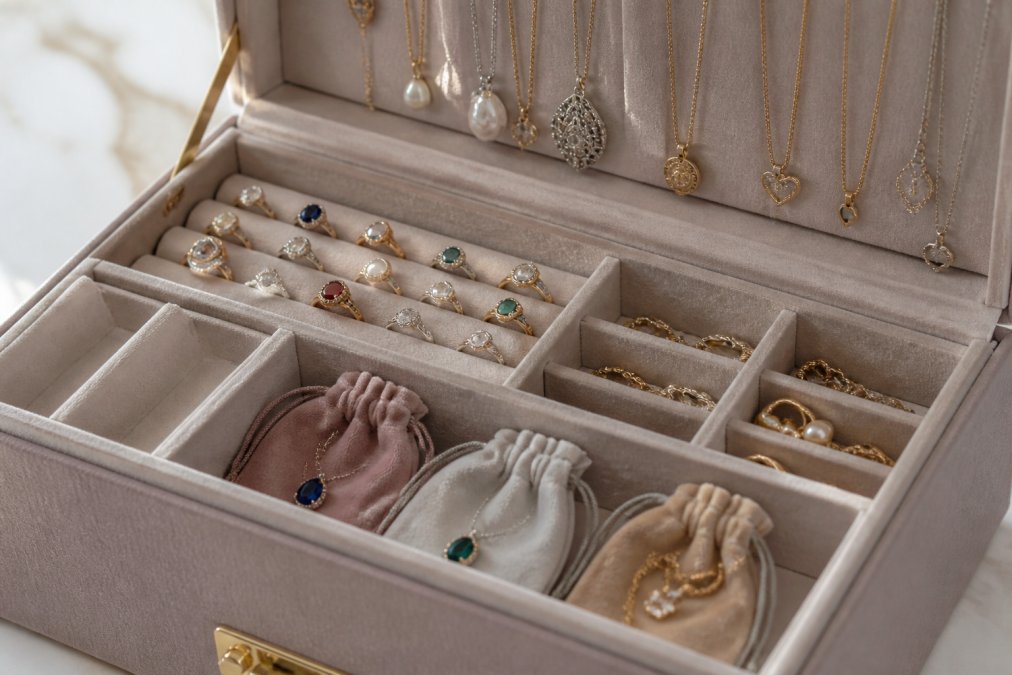
A well-organized box prevents damage worth thousands, an investment in preservation.
Soft Pouches and Ring Rolls
Soft pouches protect a single piece completely and fit in drawers, safes, or travel bags.
Pouches work best for engagement rings when traveling, vintage pieces needing isolation, delicate necklaces, and infrequently worn pieces.
Ring rolls are specialized pouches for rings. They hold multiple rings in individual slots. Each ring stays separated. No pressure on stones. Easy to transport.
Microfiber pouches repel moisture while remaining soft. Velvet absorbs moisture; silk deteriorates over time.
For how to store jewelry to prevent stone damage, pouches solve the isolation problem elegantly. They're inexpensive. They're portable. They work.
Controlling Your Storage Environment: Temperature, Humidity, and Light
Storage location matters as much as the container. A perfect box in a bad location still allows damage. Environment control prevents tarnish, discoloration, and cracking.
Moisture and Humidity Control
Moisture causes tarnish on silver, corrodes gold, and damages organic gemstones. Humidity above 60% accelerates all of these.
The ideal humidity is 40-50%. Below 40%, organic gemstones crack; above 60%, metals oxidize rapidly.
Sunlight and UV Exposure
Sunlight fades gemstones, yellows pearls, and bleaches opals, permanent discoloration that no cleaning reverses.
Temperature Stability
Temperature swings cause expansion and contraction. Organic gemstones crack. Metal settings loosen. Glued stones pop out.
Avoid:
- Direct sunlight (causes heating)
- Heating vents (temperature swings)
- Air conditioning units (condensation risk)
- Attics (temperature extremes)
- Garages (temperature and humidity swings)
How to Tell If a Gemstone Setting Is Secure
A loose setting fails silently. The stone falls out when you least expect it. Prevention requires knowing what to check.
Signs of Loose Prongs in Engagement Rings
Prongs hold stones in place. Loose prongs release stones. Check your ring monthly.
Perform this test yourself:
- Hold the ring under light
- Look at each prong where it meets the stone
- Try to move the stone side-to-side with gentle pressure
- Listen for any clicking or movement
Other signs of loose prongs:
- Visible gaps between prong and stone
- Prongs that look bent or flattened
- Uneven prong height (one taller than others)
- Movement you can see when tilting the ring
Loose prongs happen from:
- Normal wear and pressure
- Accidental impact
- Age and metal fatigue
- Poor original setting
Checking Other Setting Types
Bezels hold stones differently than prongs. Bezels wrap metal around the stone's edge. Check for gaps between metal and stone.
Storage Solutions for Specific Jewelry Types
Different jewelry types need different storage approaches. A necklace requires different care than a ring. A pearl necklace requires different care than a gold chain.
Necklaces and Chains: Preventing Tangling and Tarnish
Necklaces tangle easily. Tangled chains develop kinks. Kinks weaken metal. Weakened metal breaks.
Keep necklaces away from:
- Perfume and hairspray (chemical damage)
- Rubber bands (they mark metal)
- Plastic bags (traps moisture)
- Open air (oxidizes faster)
Pearls and Organic Materials
Pearls are jewelry's most fragile gemstones. They need isolation and specific conditions.
Store pearls:
- Separately from all other jewelry
- In soft pouches or individual compartments
- At 40-50% humidity
- Away from heat and light
- Away from chemicals and perfumes
Travel-Specific Storage Solutions
Travel creates storage challenges. Movement causes impact. Temperature and humidity swing wildly. Security becomes a concern.
For travel, use:
- Padded jewelry cases designed for transit
- Individual pouches for each piece
- Packing cubes to organize pieces
- Soft padding around the case
Maintenance and Long-Term Storage Protocols
Storage is part of a larger maintenance strategy. Regular inspection catches problems early. Professional assessment prevents disaster.
Regular Inspection and Cleaning
Check your jewelry monthly. Look for:
- Loose stones
- Bent prongs
- Tarnish buildup
- Damage to gemstones
- Worn metal
Clean jewelry gently. Use soft cloths, never abrasive materials. Warm water and mild soap work for most pieces. Pearls and opals need gentler treatment.
Never use:
- Ultrasonic cleaners (damage soft stones)
- Steam cleaners (damage organic gemstones)
- Harsh chemicals (corrode metal)
- Abrasive cloths (scratch metal and stone)
Professional Assessment for Heirloom and Fine Jewelry
Heirloom pieces deserve professional evaluation. A jeweler can spot damage you'll miss. They can tighten loose settings before stones fall out. They can assess metal fatigue before failure occurs.
Get professional assessment:
- When you inherit a piece
- Before wearing vintage jewelry regularly
- If a piece shows any damage signs
- Before long-term storage
- Annually for pieces worn frequently
Frequently Asked Questions
What is the best way to store jewelry to prevent scratches?
Store each piece individually in soft pouches or padded compartments to prevent contact between items. Use felt-lined boxes or ring rolls for rings and studs. Wrap necklaces separately to avoid tangling. Keep jewelry away from direct sunlight and store it in a cool, dry place away from temperature fluctuations. This approach protects both gemstones and precious metals from abrasion and oxidation.
How do I tell if a gemstone setting is secure?
Gently wiggle the stone with your finger, it should not move. Check that all prongs are intact and not bent or cracked. Look for any gaps between the setting and the stone. If your ring has a loose prong or the stone shifts, stop wearing it immediately and have it inspected by a professional. Regular checks every six months help catch problems before a stone falls out.
Does humidity affect gemstone jewelry storage?
Yes. High humidity causes tarnish on sterling silver and gold, and can damage organic gemstones like pearls and opals. Store jewelry in a low-humidity environment (below 50% humidity if possible) and use silica gel packets in your jewelry box to absorb excess moisture. In humid climates, replace silica gel packets every few months. Keep jewelry away from bathrooms and damp basements.
Should jewelry be stored in individual pouches?
Yes. Individual storage prevents scratching and abrasion between pieces. Soft pouches protect gemstones and precious metals from contact damage. For fine jewelry and heirlooms, individual compartments in a padded jewelry box are ideal. Necklaces, chains, and bracelets should each have their own pouch to prevent tangling and maintain their finish over time.
Your jewelry represents more than money. It holds memories. It connects you to family history. Proper storage protects that legacy. Start with individual compartments. Control your environment. Check your pieces regularly. For valuable or complex pieces, get professional guidance. These steps prevent damage and preserve what matters.
Call us about your piece. We'll assess its storage needs and recommend the best approach for your specific jewelry.