

Table of Contents
- Daily Care Routines That Protect Your Timepiece
- Water Resistance and Gasket Maintenance
- How Often to Service a Luxury Watch
- Luxury Watch Cleaning Kit Essentials
- Signs a Watch Needs Repair
- Storage, Travel, and Magnetic Field Protection
- When to Stop and Call a Professional
- Frequently Asked Questions
Last Updated: October 3, 2026
Daily Care Routines That Protect Your Timepiece
The foundation of how to maintain luxury watches happens at home, between professional services. Daily routines prevent damage and extend the life of your mechanical movement by years.
Start with your hands. Oils from skin transfer to the case and crystal. Wipe your watch with a soft, dry microfiber cloth each evening. This removes dust, sweat, and fingerprints before they accumulate. A clean watch is easier to inspect for problems.
Avoid wearing your watch during activities that expose it to extreme conditions. Remove it before showering, swimming, or exercising. Water resistance ratings describe static pressure, not dynamic force. A splash during a shower is different from a wrist submerged under running water. Even watches rated water-resistant need care.
Check your watch regularly for signs of wear. Look at the crown, case back, and lugs. These areas show stress first. A loose crown lets moisture inside. A cracked case back exposes the movement to dust and humidity. Early detection prevents expensive repairs.
Store your watch in a cool, dry place when not wearing it. Humidity damages the mechanical movement. Moisture causes oxidation on steel parts and corrosion on delicate components. A simple watch box or soft pouch works well. Avoid plastic bags that trap moisture.
Water Resistance and Gasket Maintenance
Water resistance depends on gaskets and seals, not the case itself. These rubber components create a barrier between the outside world and your mechanical movement. Over time, gaskets dry out and lose elasticity.
Check your watch's water resistance rating. A rating of 30 meters means splash-resistant only. A rating of 100 meters handles brief immersion. A rating of 300 meters or higher suits regular water exposure. Know your watch's limits and respect them.
The crown is the most common entry point for water. It screws down on many luxury watches. Before any water exposure, verify the crown is fully screwed in. A loose crown defeats all water resistance. Unscrew it only when you need to set the time or date.
Gaskets deteriorate from exposure to heat, oils, and ultraviolet light. They don't fail suddenly. They weaken gradually. A watch that survived a splash five years ago might not survive the same splash today. Professional servicing includes gasket replacement.
Between services, inspect the crown regularly. Turn it gently. It should feel smooth and secure. If it feels gritty or loose, stop using it and contact a professional. Continuing to use a damaged crown risks flooding the case.
After water exposure, dry your watch immediately with a soft cloth. Don't leave it wet. Moisture sitting on the case promotes corrosion. If your watch accidentally submerged, don't panic. Dry it quickly and have it inspected by a professional within a few days.
How Often to Service a Luxury Watch
Professional servicing keeps a mechanical movement accurate and prevents catastrophic failure. The interval depends on your watch's age, how often you wear it, and what condition it's in.
Most modern luxury watches need servicing every 5 to 10 years. This isn't a hard rule. A watch worn daily in challenging conditions might need service sooner. A vintage timepiece worn occasionally might go longer. The movement tells you when it needs attention.
Older watches, especially vintage or heirloom pieces, often need service more frequently. Decades of wear accumulate. Lubrication breaks down. Metal parts develop microscopic wear. A watch that hasn't been serviced in 20 years likely needs it now, regardless of how it runs.
Watch your accuracy as a service indicator. A mechanical movement typically loses or gains 10 to 20 seconds per day. If your watch drifts beyond that range, servicing might help. Sometimes accuracy drops because the movement needs lubrication or adjustment. Sometimes it indicates a problem that requires professional attention.
Listen for changes in sound. A healthy mechanical watch has a smooth, even tick. A watch that suddenly sounds rough or irregular might have internal damage. Don't ignore this warning sign.
| Service Indicator | Action |
|---|---|
| Accuracy beyond ±20 seconds per day | Schedule inspection |
| Crown feels loose or gritty | Stop using immediately |
| Water inside the crystal | Seek service within days |
| Movement sounds rough | Have inspected soon |
| 5-10 years since last service | Plan routine maintenance |
At Josef & Joseph, we understand that how to maintain luxury watches between services includes knowing when professional help is necessary. We're equipped to handle complex movements that other shops decline, so you know your timepiece is in expert hands.
Luxury Watch Cleaning Kit Essentials
A proper cleaning kit keeps your watch safe at home. The right tools prevent damage that amateur cleaning causes.
Start with microfiber cloths. These are essential. Cotton and paper damage the crystal and case finish. Microfiber is soft enough for sapphire and steel. Buy several cloths and replace them regularly. Dirty cloths scratch surfaces.
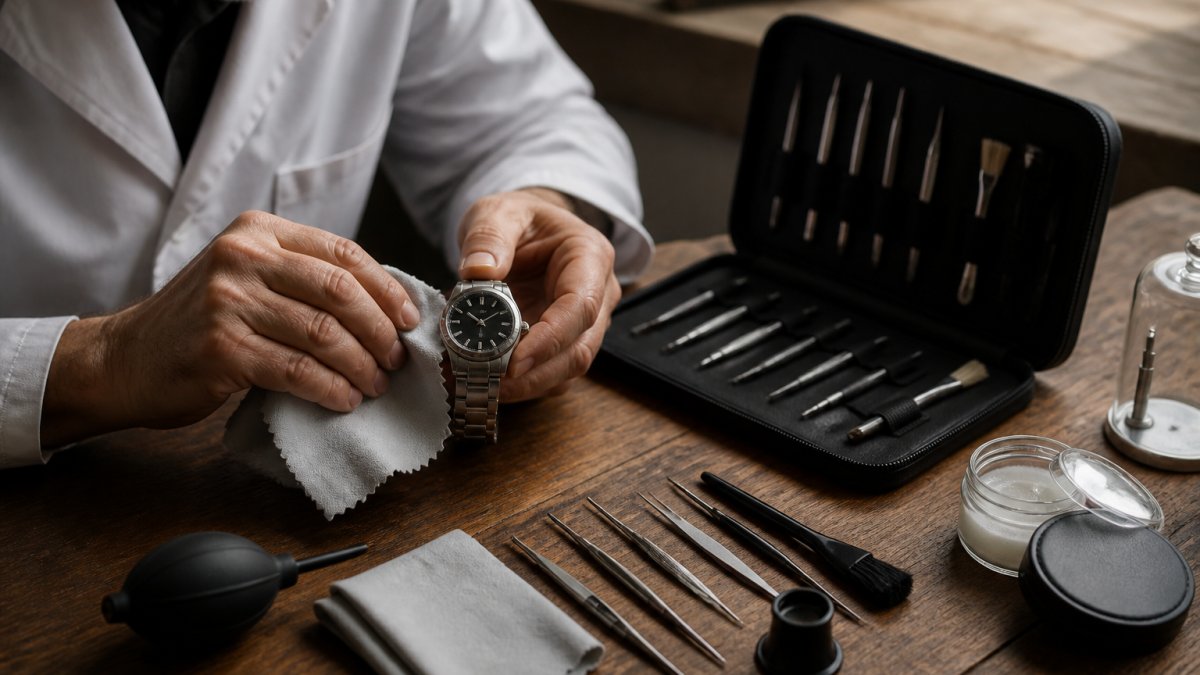
A soft brush removes dust from the bezel and case. Natural bristles work best. Synthetic bristles scratch. Avoid stiff brushes designed for other purposes. A brush meant for jewelry is ideal.
Distilled water is your only liquid. Never use tap water. Tap water contains minerals that leave residue and promote corrosion (Hardness of Water). Distilled water evaporates cleanly. Use it sparingly. A damp cloth, not a soaked one, is all you need.
Skip commercial watch cleaners unless they're specifically formulated for luxury timepieces. Many contain chemicals that damage gaskets or the movement. Stick to distilled water and a microfiber cloth. This combination handles 99% of cleaning tasks.
For stubborn dirt in crevices, use a soft wooden toothpick. Never use metal picks. Metal scratches and can damage gaskets. A wooden pick is gentle enough for delicate work.
Store your cleaning supplies in a dry place. A small box or pouch keeps everything organized and protected. Keep your kit away from children and pets.
Signs a Watch Needs Repair
Recognizing problems early prevents small issues from becoming expensive repairs. Your watch sends signals when something is wrong.
A watch that stops running needs attention. Don't assume it's a dead battery if it's a mechanical watch. Mechanical movements don't have batteries. A stopped watch might have a broken balance wheel, a snapped mainspring, or a lubrication problem. Only a professional can diagnose it.
Condensation inside the crystal is a red flag. Moisture inside means water breached the gaskets. The movement is at risk. Even if the watch still runs, internal corrosion is beginning. Have it serviced immediately.
A watch that suddenly runs fast or slow might be fine, or it might not. Small changes are normal. A watch that gains or loses 30 seconds per day is drifting too much. This often indicates a problem with the oscillation or the movement needs lubrication.
A crown that won't turn or feels stuck signals trouble. This might mean the movement is jammed or the crown is damaged. Forcing it causes more damage. Stop and seek professional help.
Visible cracks in the crystal or case are obvious problems. A cracked crystal lets dust inside. A cracked case exposes the movement to moisture. Repair these before wearing the watch again.
A watch that feels loose or rattles inside the case might have a broken component. Movement inside the case shouldn't happen. This requires professional diagnosis.
Changes in how the watch feels can signal problems. If it suddenly feels heavier or lighter, something internal might have shifted. If the caseback feels loose, gaskets might be failing.
Storage, Travel, and Magnetic Field Protection
How you store and transport your watch affects its longevity. Magnetic fields are an invisible threat that most people overlook.
Store your watch away from electronics. Smartphones, laptops, and speakers generate magnetic fields. A watch stored next to a phone for weeks can lose accuracy or stop running. Magnetic exposure doesn't always cause immediate damage. It accumulates over time.
Use a watch box or soft pouch for storage. Avoid plastic bags that trap moisture. A dedicated watch box provides protection and keeps your timepiece safe from impacts.
For travel, pack your watch in a protective case. A hard case prevents damage from luggage handling. Wrap the watch in soft cloth inside the case. This prevents movement during transport.
Never pack your watch in checked luggage on flights. Pressure changes and temperature swings in cargo holds damage mechanical movements. Keep your watch with you in carry-on luggage.
Avoid storing your watch near magnets. Refrigerator magnets, magnetic jewelry organizers, and magnetic watch stands all pose risks. If your watch has been near a magnet, have it checked for magnetization.
Traveling to different climates requires care. A watch moved from a cold airport to a warm hotel experiences thermal shock. Condensation forms inside the case. Let your watch acclimate to the new temperature before wearing it.
Keep your watch wound if it's an automatic. An automatic watch that sits for weeks can stop. If you're traveling and won't wear your watch daily, hand-wind it every few days or use a watch winder. A winder keeps the mainspring tensioned and the movement lubricated.
When to Stop and Call a Professional
Knowing the boundary between home care and professional service protects your investment. Some problems require expertise you don't have.
Stop immediately if you hear grinding or scraping sounds. These indicate internal damage. Continuing to wear the watch causes more harm. A professional needs to diagnose and repair it.
If your watch leaks water despite no obvious damage, stop wearing it. Internal seals might be failing. Only a professional can replace them properly.
Never attempt to replace a crystal yourself. Removing and reinstalling a crystal requires specialized tools and knowledge. A botched crystal replacement ruins the watch's water resistance and can damage the case.
Don't try to adjust the movement for accuracy. Adjustments require precision tools and training. A small mistake throws the watch further off or causes permanent damage.
If you need to open the case back, stop. Case backs seal with gaskets. Opening and closing one without proper technique breaks the seal. Only a professional should handle this.
Never force the crown if it won't turn. Forcing it breaks internal components. This turns a small problem into a major repair.
If your watch needs a part that no longer exists, seek a professional who can fabricate it. Many shops decline complex vintage repairs. At Josef & Joseph, we specialize in fabricating parts for pieces that other shops won't touch.
Maintaining a luxury watch between professional services is about consistency and attention. Daily care with the right tools prevents most problems. Understanding your watch's limits protects it from damage.
The timepiece you own today can become an heirloom for future generations. It deserves care that matches its value.
Frequently Asked Questions
How often should I have my luxury watch professionally serviced?
The interval for professional service depends on your watch's age, how often you wear it, and its current condition. The mechanical movement's oscillation and caliber condition should guide your schedule.
What are the most important signs a watch needs repair?
Watch for moisture inside the crystal, visible corrosion or oxidation on metal parts, loss of accuracy beyond normal tolerance, or a stopped mechanical movement. If the crown feels loose, water enters during daily wear despite stated water resistance, or the chronograph function fails, professional attention is needed immediately. Unusual sounds from the movement or difficulty winding an automatic watch also indicate internal issues requiring servicing.
Can I clean my luxury watch at home safely?
Yes, but only with appropriate tools and careful technique. Use a soft microfiber cloth for the case and band. Never use ultrasonic cleaners on vintage or delicate pieces, and avoid chemical exposure entirely. For the crystal and crown, gentle dry cleaning is safest.
How should I store a luxury watch to prevent damage?
Store your watch in a cool, dry place away from magnetic fields, direct sunlight, and temperature fluctuations that cause thermal shock. Use a watch case or box with padding to protect the crystal and prevent oxidation. Keep humidity levels moderate to avoid moisture damage to the mechanical movement.