

Last Updated: October 25, 2026
Quick Summary
Choosing the right insurance for valuable heirloom jewelry requires a separate policy beyond your homeowners coverage, which typically caps jewelry protection at $1,500 to $2,500 total. Dedicated jewelry insurance covers theft, loss, damage, and mysterious disappearance at a cost of roughly 2-4% of the item's value annually, protecting irreplaceable pieces that standard policies severely limit.
- Most homeowners policies cap jewelry coverage at $1,500 to $2,500 total, leaving significant gaps for valuable collections
- A $5,000 piece typically costs $100-$200 per year to insure with dedicated jewelry insurance
- Professional appraisals from certified gemologists are required by insurance companies and cost $75-$200 per piece
- Scheduled jewelry policies list each piece individually with its own coverage amount for precise protection
- Update appraisals every three to five years for vintage pieces, as their value may appreciate over time
Table of Contents
- Why Heirloom Jewelry Needs Separate Insurance Coverage
- Understanding Your Homeowners Insurance Jewelry Limits
- Getting a Professional Jewelry Insurance Appraisal
- Comparing Jewelry Insurance Policies and Coverage Options
- Organizing Your Jewelry Insurance Claim Documentation
- Evaluating Jewelry Insurance Deductible and Premium Costs
- Protecting Vintage and Antique Pieces: Special Considerations
- Getting Your Heirloom Jewelry Professionally Restored and Insured
- Frequently Asked Questions
Why Heirloom Jewelry Needs Separate Insurance Coverage
Your homeowners insurance policy covers your house and its contents, but it's not designed for valuable heirloom jewelry, choosing the right insurance for valuable heirloom jewelry requires a separate approach. This is where choosing the right insurance for valuable heirloom jewelry becomes critical.
Most people don't realize their jewelry is underprotected until it's too late. When a piece is lost, stolen, or damaged, they discover their claim was denied or only partially covered. The gap between what you own and what your policy covers can be thousands of dollars.
Separate jewelry insurance policies exist specifically to protect what matters most. They cover theft, loss, damage, and mysterious disappearance, situations your homeowners policy either excludes or limits severely.
The cost of jewelry insurance is surprisingly affordable. A policy that covers a $5,000 piece typically costs between $100 and $200 per year, depending on the type of jewelry and your deductible. That's roughly 2-4% of the item's value annually.
Understanding Your Homeowners Insurance Jewelry Limits
Your homeowners insurance does provide some jewelry coverage, but the limits are restrictive. If you have multiple valuable items, you're already over that limit. The National Association of Insurance Commissioners advises homeowners to review their policy limits carefully.
Here's what homeowners insurance typically covers:
- Jewelry lost or damaged in a covered event (fire, theft, certain accidents)
- Coverage only up to the policy's stated limit
- A deductible applies before coverage kicks in
- Coverage may exclude mysterious disappearance or loss outside your home
What it doesn't cover:
- Loss of a single stone from a setting
- Damage during normal wear
- Mysterious disappearance (losing a ring at the beach)
- Theft from an unlocked car or unattended public place
- Damage during cleaning or repairs
To understand your current coverage, pull out your homeowners policy and look for the "personal property" section. Find the line item for jewelry. That number is your maximum coverage. If you have $15,000 in jewelry and your policy covers $2,000, you have a $13,000 gap.
The Insurance Information Institute recommends getting a professional appraisal for any piece valued over $1,000. This appraisal becomes your documentation if you ever need to file a claim.
You can increase your homeowners jewelry coverage by adding a rider or endorsement, but it's still limited and expensive. A rider might increase your limit to $5,000 or $10,000, but you'll pay a premium for that extra coverage.
Learn more about how to identify authentic heirloom jewelry before you get it appraised and insured.
Getting a Professional Jewelry Insurance Appraisal
You cannot choose the right insurance for valuable heirloom jewelry without a professional appraisal. Insurance companies require documentation of what you own and what it's worth. An appraisal is a detailed written assessment of your jewelry's value, condition, and characteristics. It's the foundation of your insurance claim if something ever happens.
What to Expect During the Appraisal Process
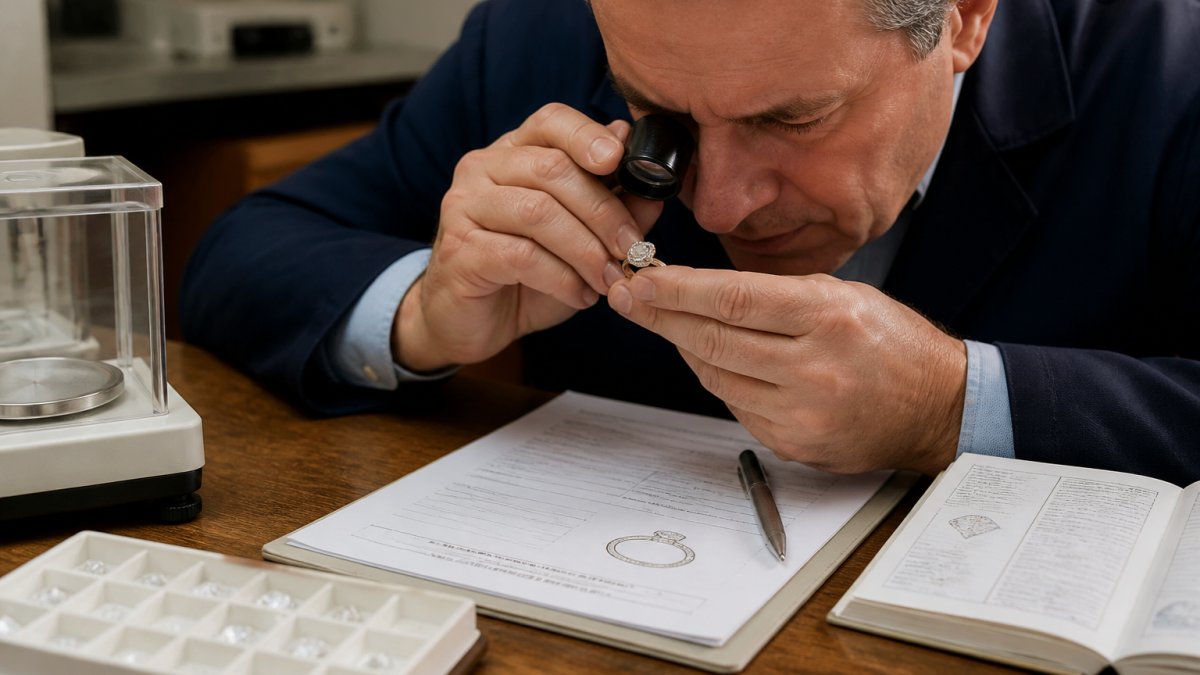
A jewelry appraisal takes 30 to 60 minutes per piece, depending on complexity. The appraiser will examine your jewelry under magnification, test metals, weigh stones, and document everything.
The appraiser will measure your stones and assess their quality. For diamonds, they'll evaluate the four Cs: carat weight, color, clarity, and cut (Diamond Quality Factors).
You'll receive a written report with photographs, detailed descriptions, and a replacement value estimate. This document is what you'll submit to your insurance company. Make sure the appraiser is a certified gemologist or American Society of Appraisers member.
Appraisal costs typically range from $75 to $200 per piece, depending on the jewelry's complexity and your location. Vintage or antique pieces may cost more because they require specialized knowledge.
When you get an appraisal, ask the appraiser about the jewelry's condition and any restoration needs. We recommend learning about our professional heirloom jewelry restoration process if your pieces need work before you insure them.
Comparing Jewelry Insurance Policies and Coverage Options
Not all jewelry insurance policies are the same. You have several options, each with different coverage levels, costs, and terms.
Standard jewelry insurance policies cover theft, loss, and damage. They're available from most major insurance companies as add-ons to homeowners or renters policies.
Scheduled jewelry policies list each piece individually with its own coverage amount and deductible. You provide an appraisal for each item.
Blanket jewelry coverage provides a single limit for all your jewelry combined. You don't schedule individual pieces. It's cheaper but less precise.
Mysterious disappearance coverage protects against loss you can't explain. Your ring slips off at the beach. Your bracelet vanishes from your nightstand.
Accidental damage coverage includes damage from dropping, hitting, or mishandling your jewelry. A stone falls out. The setting bends. The clasp breaks.
Compare policies by looking at:
- Deductible amount ($0 to $500 is typical)
- Coverage percentage (80% to 100% of appraised value)
- Annual premium cost
- Whether mysterious disappearance is included
- Whether accidental damage is covered
- Claim process and payout speed
- Whether you can choose your own jeweler for repairs
The cheapest policy isn't always the best. A $50-per-year policy with a $500 deductible and 80% coverage is less useful than a $150-per-year policy with a $100 deductible and 100% coverage.
Organizing Your Jewelry Insurance Claim Documentation
If you ever need to file a jewelry insurance claim, you'll need organized documentation. Starting now, create a system for storing your appraisals, receipts, photographs, and insurance policy information. This preparation makes the claim process faster and smoother.
Keep these documents together:
14K White Gold Diamond Filigree Ring →
- Professional appraisals with photographs and detailed descriptions
- Purchase receipts if you have them
- Photographs of your jewelry (clear, well-lit images)
- Serial numbers or identifying marks
- Insurance policy details and coverage amounts
- Contact information for your appraiser and jeweler
Store physical copies in a fireproof safe or safety deposit box. Keep digital copies on a secure cloud service. If your home burns down, you need documentation that survived the fire. Digital backups ensure you can access your records from anywhere.
When you file a claim, provide everything you have. The more documentation, the faster the insurance company processes your claim. They'll compare your appraisal to current market values and process payment accordingly.
Explore storage solutions like the Caroline jewelry portfolio to keep your pieces organized and protected while you maintain your documentation.
Evaluating Jewelry Insurance Deductible and Premium Costs
Your deductible and premium directly affect your insurance costs and protection level. A deductible is the amount you pay out of pocket before insurance covers the rest.
Lower deductibles cost more in premiums. A $0 deductible policy might cost $200 per year for a $5,000 piece.
Higher deductibles cost less in premiums but increase your out-of-pocket risk.
Calculate your break-even point. If a policy costs $150 more per year but saves you $200 on the deductible, you break even after filing one claim.
Premium costs also depend on:
- The jewelry's appraised value
- The type of jewelry (rings are riskier than necklaces)
- Your location and local theft rates
- Your claims history
- The insurance company's underwriting standards
A $10,000 diamond ring might cost $150 to $300 annually to insure fully. A $3,000 gold bracelet might cost $50 to $100 annually. Request quotes from multiple insurers.
Review your policy annually. If your jewelry's value changes, update your coverage. If you sell a piece, remove it from your policy.
Insurance costs vary based on deductible amounts, coverage levels, and the characteristics of your jewelry.
| Jewelry Type/Value | Annual Premium Range | Typical Deductible | Coverage Level |
|---|---|---|---|
| $5,000 piece, full coverage | $100-$200 | $250-$500 | 80-100% |
| $10,000 diamond ring | $150-$300 | $250-$500 | 80-100% |
| $3,000 gold bracelet | $50-$100 | $250-$500 | 80-100% |
| $0 deductible policy | $200/year | $0 | Full coverage |
| $500 deductible policy | $100/year | $500 | Full coverage |
Protecting Vintage and Antique Pieces: Special Considerations
Vintage and antique jewelry requires extra care when choosing insurance coverage. These pieces have unique characteristics that standard policies may not fully address.
Vintage jewelry may have delicate construction that modern pieces don't. Clasps may be fragile. Stones may be held with outdated techniques. Metals may be more brittle.
Antique pieces sometimes have no hallmark or identifying marks. The appraiser will document this in the appraisal.
Learn more about jewelry repair for heirloom pieces to understand restoration options that preserve value while maintaining insurability.
Vintage pieces may appreciate in value over time. A ring worth $2,000 five years ago might be worth $2,800 today. Update your appraisal every three to five years for valuable vintage jewelry.
Some insurers specialize in vintage and antique jewelry. They understand the unique risks and values of older pieces.
Store vintage and antique pieces carefully. Keep them in a climate-controlled environment. Extreme temperature and humidity changes can damage delicate settings. Use acid-free jewelry boxes and avoid storing pieces in plastic.
Getting Your Heirloom Jewelry Professionally Restored and Insured
Before you insure a piece, address any existing damage. A broken clasp, loose stone, or worn setting affects the jewelry's value and insurability.
Understand our professional heirloom jewelry restoration process to see how we approach complex pieces that need expert care.
Restoration work should be documented and included in your appraisal. If a jeweler replaces a stone or repairs the setting, get a receipt and photograph of the work. This documentation becomes part of your insurance record.
After restoration, get a new appraisal. The piece's value may have changed. A ring with a replaced stone or reinforced setting is different from the original.
Insurance companies appreciate knowing your jewelry has been professionally maintained. It reduces their risk. A piece in good condition with professional documentation is less likely to have problems.
Schedule regular maintenance for pieces you wear frequently. A ring worn daily needs professional cleaning and inspection annually. Earrings need new backs periodically. Necklaces need clasp checks.
Frequently Asked Questions
Do you need an appraisal to insure heirloom jewelry?
Yes, most insurance companies require a professional jewelry insurance appraisal before issuing a policy. The appraisal documents the piece's description, condition, materials, gemstones, and replacement value. This protects both you and the insurer by establishing what the item is worth and what it contains. Without an appraisal, you may struggle to prove your claim if the jewelry is lost or damaged.
What's the difference between homeowners insurance jewelry limits and a dedicated jewelry policy?
Standard homeowners insurance typically covers jewelry up to $1,500 to $2,500 total, with per-item limits of $200 to $500. Valuable heirloom pieces often exceed these caps. A dedicated jewelry insurance policy offers much higher coverage limits, often up to the full appraised value, and covers accidental damage, loss, and theft without the same restrictions. For pieces worth more than a few thousand dollars, a separate policy is almost always necessary.
How often should you update a jewelry appraisal for insurance?
Jewelry appraisals should be updated every 3 to 5 years, or whenever gold, silver, or gemstone prices change significantly. Market fluctuations affect the replacement value of your pieces. If you have restoration work done, such as a professional cleaning, stone replacement, or structural repair, update the appraisal afterward. This ensures your insurance coverage matches the current value and condition of your heirloom jewelry.
What information should you document before insuring inherited jewelry?
Document the piece's weight, dimensions, metal type and karat, all hallmarks and maker's marks, gemstone descriptions with carat weight, any damage or repairs, and its provenance if known. Take clear photographs from multiple angles in good lighting. Obtain a professional appraisal. Keep receipts for any restoration or cleaning work. Store this jewelry insurance claim documentation safely, digitally and in print. This comprehensive record makes filing a claim much faster and more successful if your heirloom jewelry is ever lost or damaged.
Choosing the right insurance for valuable heirloom jewelry protects what matters most. Start with a professional appraisal, compare policies carefully, and organize your documentation. If your pieces need restoration before insuring them, we're here to help. Call us about your piece to discuss restoration options and insurance preparation.
