

Table of Contents
- Why Vintage Mantle Clocks Develop Problems
- Problem 1: Worn Gears and Dirty Movements
- Problem 2: Pendulum and Beat Adjustment Issues
- Problem 3: Incorrect Chime Timing and Striking Mechanism Faults
- How to Lubricate a Vintage Clock (And When to Leave It Alone)
- Problem 4: Environmental Damage and Transportation Woes
- Problem 5: Intermittent Stopping and Internal Component Wear
- Antique Clock Movement Repair: When DIY Becomes Risky
- Frequently Asked Questions
Last Updated: October 2, 2026
Why Vintage Mantle Clocks Develop Problems
Vintage mantle clocks are mechanical timepieces built with hundreds of moving parts, and every one of those parts wears down over decades of use.
A mantle clock is a spring-driven machine that sits on a shelf or mantel and marks time through a gear train, an escapement, and a striking mechanism.
The good news: most of these problems are fixable. The bad news: waiting makes them worse. A worn pivot can grind a bushing into an oval shape.
National Association of Watch and Clock Collectors resource library
Problem 1: Worn Gears and Dirty Movements
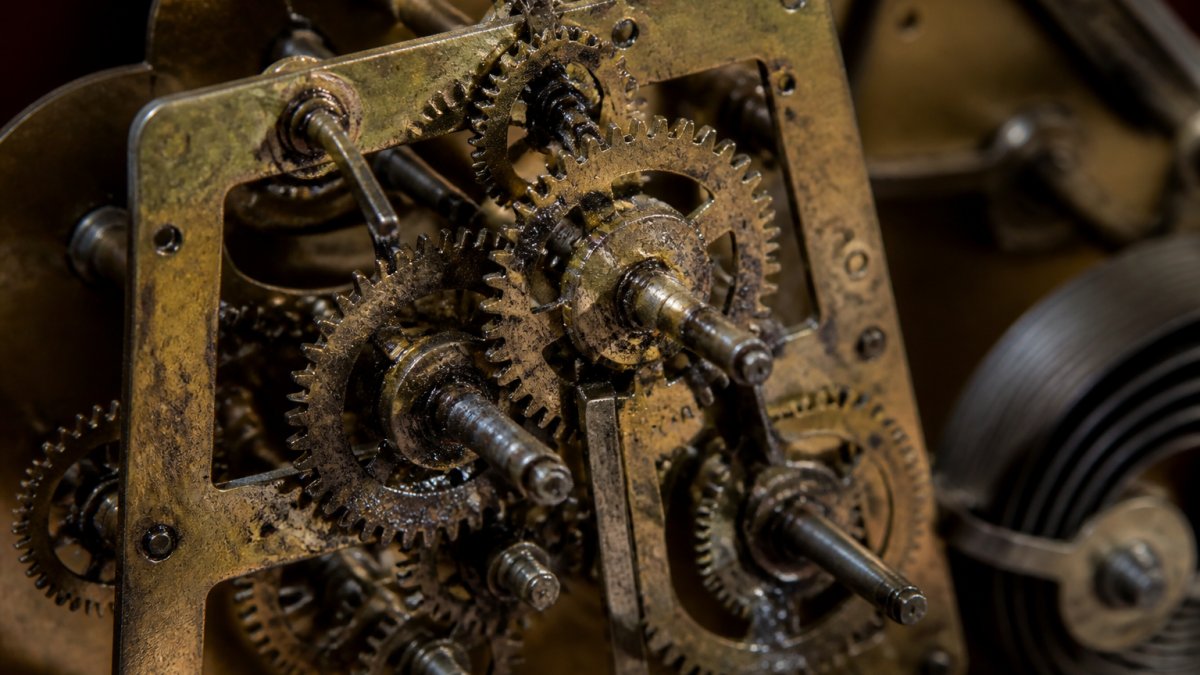
Dirty movements and worn gears top the list of vintage clock problems. Old lubricant turns into a sticky paste that traps dust, and that grit slowly eats away at brass pivots and steel pinions.
The gear train is the chain of wheels that carries power from the mainspring to the escapement. When debris builds up, friction rises. The clock runs slow, then stops.
Signs Your Gear Train Needs Attention
- The clock runs for a few hours, then stops
- You hear a grinding or scraping sound while it runs
- The hands move in jerky steps instead of a smooth sweep
- Dark residue or green oxidation appears near the pivots
- The clock needs a push to keep going
Problem 2: Pendulum and Beat Adjustment Issues
A pendulum clock that runs fast, slow, or stops after a few minutes usually has a beat problem.
Two things cause most beat issues: the clock is not level, or something is blocking the pendulum. A clock that leans even slightly will run unevenly.
Fixing the beat starts with leveling. Use a small bubble level on the case, front to back and side to side.
Problem 3: Incorrect Chime Timing and Striking Mechanism Faults
A clock that strikes the wrong hour, chimes at odd times, or skips a strike has a synchronization problem in the striking mechanism.
Common causes include a bent hammer arm, a worn chime train pivot, or a count wheel that has slipped.
Here is the hard truth: chime timing is one of the trickiest repairs on a vintage clock.
If your clock strikes the wrong hour, note exactly what it does and when. That record helps a horologist diagnose the fault fast.
How to Lubricate a Vintage Clock (And When to Leave It Alone)
Knowing how to lubricate a vintage clock correctly is the difference between a long life and a ruined movement. Clock oil is not the same as general-purpose oil. It is formulated to stay put, resist oxidation, and not migrate into places it does not belong. Most general-purpose lubricants, including the spray cans sold at hardware stores, are too thin, too volatile, or too tacky for a clock movement.
The Beginner Tool Kit
No top-ranking guide tells you what to actually buy before you touch a movement. Here is the short list most practitioners consider the minimum for owner-level maintenance:
- Clock oil, a synthetic, non-migrating oil sold specifically for horology (look for a small needle-tip bottle; a little goes a very long way)
- A fine oiler, a wire applicator or a needle-tip bottle, not a dropper
- Pegwood, soft pointed sticks used to scrub pivot holes and gear teeth without scratching brass
- Tweezers, fine-point, non-magnetic, for handling small parts and springs
- A small screwdriver set, hollow-ground tips sized for clock screws, which are softer than modern hardware
- A soft brush, a clean artist's brush or a watchmaker's dust brush
- A loupe or magnifier, 5x to 10x, for inspecting pivots and bushings
- A small bubble level, for checking the case before and after any work
You do not need an ultrasonic cleaner or a lathe to oil a clock. Those belong to a full service, not a maintenance pass.
How to Apply the Oil
You need three things: the right oil, a small applicator, and a steady hand. Apply one small drop to each pivot point where the gear train meets its bushing. Less is more. A flooded pivot attracts dust and causes the exact problem you are trying to prevent.
- Use only clock oil made for horology
- Apply one drop per pivot, no more
- Never oil a dirty movement; clean it first
- Do not oil the escapement or the mainspring barrel
- Reassemble and test the beat after oiling
DIY Safety: What You Can Break by Trying
Most guides assume you are ready to tinker. You are not, and that is worth saying plainly. Two parts of a vintage mantle clock are especially unforgiving:
- The mainspring. It stores enough energy to cut a finger or launch a tool across the room if it is released without a let-down tool. Never open a mainspring barrel by hand.
- The suspension spring and hairspring. These are thin, brittle, and easy to kink. A bent suspension spring will make the clock run erratically, and a kinked hairspring on a balance-wheel clock can stop it entirely. Neither is a part you can straighten back to spec by feel.
A common pattern in repair shops is a clock that arrived running poorly and left needing a full rebuild because an owner tried to 'help' it with a spray can or a pair of household pliers.
A full cleaning and oiling is best left to a horologist with the right tools and solvents. It is not a job for a spray can.
Problem 4: Environmental Damage and Transportation Woes
Heat, humidity, and movement are the quiet killers of vintage mantle clocks. Most troubleshooting guides focus on the movement and ignore the room the clock lives in. That is a mistake, because the environment acts on the clock every day, whether it is running or not.
How Humidity and Temperature Affect a Clock
Wood cases and metal movements expand and contract at different rates. When the air is damp, a wood case swells; when the heat comes on and the air dries out, it shrinks.
Metal parts react too:
- Steel pivots and pinions rust in damp air, especially in basements, garages, and coastal homes
- Brass tarnishes faster in humid or salty air, and green oxidation near a pivot is a sign moisture has been sitting there
- Mainsprings can corrode inside the barrel, where you cannot see it until the clock stops
- Lubricant thickens in cold rooms and thins in hot ones, so a clock that runs fine in spring may run slow in an unheated room in winter
A practical target is a stable indoor environment: roughly 40 to 60 percent relative humidity and a temperature that does not swing more than a few degrees between day and night.
Transportation Is Its Own Risk
A pendulum left hanging during a move will swing and bend its suspension spring. Weights left attached can crack the case or snap a chain. Even a short drive across town can do damage if the clock is not packed right.
Before moving any mantle clock:
- Remove the pendulum and weights
- Secure the hands with soft foam
- Wrap the case in a blanket, not plastic
- Keep the clock upright the whole time
- Let it sit for a day before restarting it
Plastic wrap is worth calling out specifically: it traps moisture against the finish and can lift veneer or leave a haze on shellac. A cotton sheet or a moving blanket breathes; plastic does not.
After the Move
Give the clock a day to acclimate to the new room before you restart it. Then check the case for level in both directions, rehang the pendulum, and listen to the beat.
For large or fragile pieces, a house call from a trained clockmaker is often safer than a car ride. Josef & Joseph offers on-site service for exactly this reason.
Problem 5: Intermittent Stopping and Internal Component Wear
A clock that stops and starts on its own is telling you something is worn.
Common culprits include a worn mainspring, a stretched suspension spring, a cracked pivot, or a bushing worn into an oval.
Here is what most guides miss: intermittent stopping rarely fixes itself. It gets worse.
If your clock stops at the same spot on the dial every time, note the position.
Antique Clock Movement Repair: When DIY Becomes Risky
Antique clock movement repair is not a beginner project. Once you are past oiling and leveling, the work involves disassembly, cleaning, pivot polishing, bushing replacement, and re-timing the striking mechanism. Each step needs the right tools and a steady hand.
The danger is not just breaking a part. It is breaking a part that no longer exists. Many vintage clocks use parts that were never mass-produced. A cracked pivot or a bent escape wheel may need to be fabricated by hand, which is a job for a master clockmaker.
So when should you stop and call a professional?
- The clock has stopped completely and will not run
- You see broken, bent, or missing parts
- The chime plays the wrong sequence
- The clock has not been serviced in years
- The piece has sentimental or family value
At Josef & Joseph, we specialize in the pieces other shops turn down. With over 30 years of European master training and a workshop built for hand fabrication, we restore complex, vintage, and heirloom clocks that would otherwise sit silent. We also make house calls for large or fragile pieces. Preserving these mechanical legacies requires a deep understanding of the heirloom quality traits that distinguish a masterpiece from a mere timekeeper.
Frequently Asked Questions
What are the most common mechanical issues in vintage mantle clocks?
The most frequent problems are worn or dirty gears, pendulum beat adjustment errors, chime timing faults, lack of proper lubrication, and intermittent stopping caused by internal component wear. Dust and old oil create friction on pivots and bushings, which slows the gear train. Many vintage mantle clocks also suffer from mainspring fatigue or escapement wear after decades of use. A professional inspection can identify which issue is affecting your clock before it causes further damage.
Can you overwind a mantle clock?
No, you cannot overwind a mechanical clock. The mainspring can only hold so much tension, and a properly functioning winding mechanism will simply stop accepting more turns. If your clock stops after winding, the real issue is likely a worn mainspring, a broken click, or debris in the gear train. Forcing the winding key past its natural stopping point can damage the mainspring or arbor, so stop when you feel resistance.
How often should a vintage mantle clock be serviced by a professional?
Most horologists recommend a full servicing every 5 to 7 years for vintage mantle clocks in regular use. During servicing, the movement is disassembled, cleaned, inspected for worn bushings and pivots, and reassembled with fresh clock oil. Clocks kept in humid environments or near kitchens may need attention sooner because moisture and airborne grease accelerate oxidation and debris buildup. Regular servicing prevents small issues from becoming expensive repairs.
Are antique mantle clocks worth the cost of professional repair?
Whether repair is worth it depends on the clock's maker, age, condition, and sentimental value. A vintage clock restoration cost varies based on the complexity of the movement and whether parts must be fabricated. Many antique mantle clocks from well-known makers hold or increase in value when restored properly. For heirloom pieces, restoration preserves both function and family history. A qualified horologist can assess your clock and give an honest recommendation before you commit.
A vintage mantle clock is more than a machine. It is a piece of family history, and it deserves care that matches its age. If your clock has stopped, lost its beat, or gone silent, the problem will not fix itself. Josef & Joseph offers honest, no-commitment consultations, hand restoration by a master clockmaker, and on-site service for pieces too fragile to move. Get started with Josef & Joseph and bring your heirloom back to life.